Let’s talk about lunch, and go through a few options that work in a campsite setting. We’ll also discuss ways to prepare the noon-time meal ahead of time and eat on-the-go.
How to fit in a healthy lunch amid activities.
You’re probably going to be busy doing things during the day. Optionally, if your whole day consists of sitting by the campsite and reading or hanging out, then most likely you’ll build a fire at breakfast and keep it going minimally all day, and then cook for lunch. Or perhaps you have someone who loves to prepare food over the fire, and will cook lunch. But if that isn’t your situation, read on.
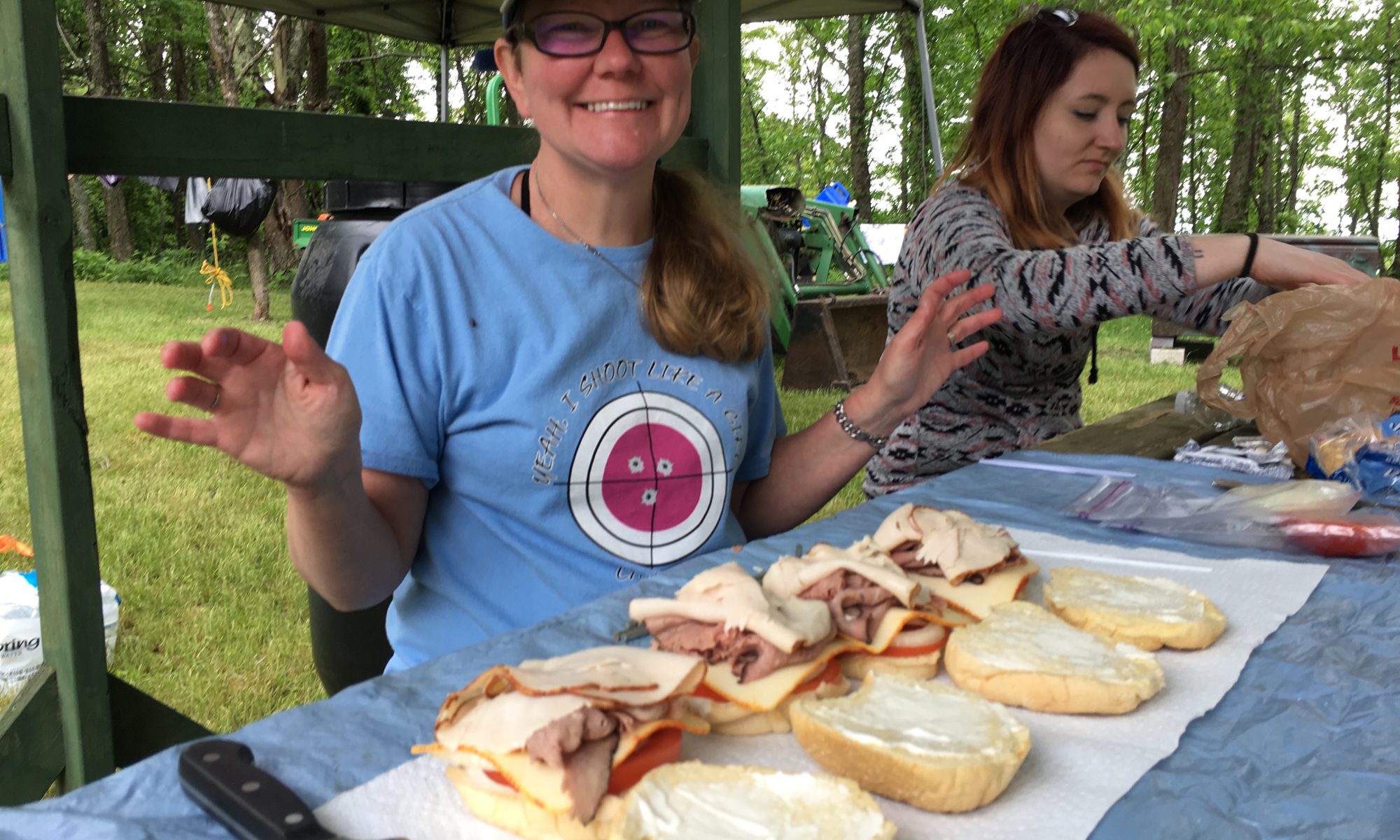
Lunch is usually something that can be put together quickly. That means it is cold so you don’t need to tend a fire or cook. For us, sandwiches are one of our go-to’s. A really easy sandwich is peanut butter and jelly—it is quick and requires very little cleanup. Another option is a cold cut sandwich. Pick your favorite refrigerated meat and or cheese, and it can keep in the cooler. Another alternative is to use canned or packaged meats or spreads. They don’t require refrigeration until opened. You may need mayonnaise or mustard. One trick with condiments is to get the squeeze bottle so you don’t need a knife. Another condiment choice is to use the single serving packets, which don’t require refrigeration.
One thing Connie does is slice tomato and onion at the house and package it up, so we have a vegetable option to add to our cold cut sandwiches. If you have access to a cooler, you could bring a Tupperware container of tuna, chicken, or egg salad to make a simple sandwich.
Pre-made lunches.
You can make lunch at home or pick up premade meals at the grocery store before leaving for camp. Alternatively, you could pick up a lunch in the morning on your way to a hike. Throw them in your cooler and your good to go. We hunt down hole-in-the-wall sandwich shops and grab specialty sandwiches in the morning, then enjoy them at lunchtime. The neat thing about places like this is they also offer pre-made basic box lunches.
Leftovers or store-bought.
Don’t forget, leftover pizza is tasty cold. Something like Bojangles fried chicken is superb cold. Think about things your family will like and won’t mind cold or at least not heated up. The trick with lunch is speed in preparation. You may sit down for a few minutes to enjoy the meal, but then you’re going to be on the go again. So, don’t get tied up mid-day with some elaborate event, unless that’s your choice.
Building your lunch.
Think about your main course at lunch, perhaps a sandwich or a piece of leftover chicken. Then you’ll want something on the side, maybe chips, pretzels, sweet potato chips, sesame sticks, kale chips. Or perhaps you’ll opt for an apple, orange, banana, or kiwi. There’s a wide range of options here, from healthy to not so much. One thing to consider is how healthy your family eats, camping might be an appropriate time to add those potato chips on the trail as a treat.
Lunch is usually in the middle of activities, so eat on the go.
Because lunch is mid-day, it lands smack dab in the middle of whatever activities you’re doing. Many times you don’t want to interrupt those activities, you want to enjoy them. Those are the days when eating on the go works best.
Perhaps you choose to pack your lunch in the morning at the campsite and put it in your bag. You can either eat as you hike or sit down on a rock or an overlook to enjoy the meal. That’s a great way to have a nice, peaceful meal appreciating nature. Savor the view and drink in the outdoors.
Stay hydrated.
Bring water or sports drink to keep you hydrated. These days there are many alternatives, even sugar-free drinks have electrolytes in them. Also, don’t forget to clean up your mess, make sure you leave the campsite and trails in better shape than when you arrived.
Plastic and paper ware.
Some people are concerned about filling up landfills. Keep in mind the total amount of plastic consumed in one knife is pretty small. Of course you have the option of washing and reusing any plastic products you use. If you use paper products you can burn them in the campfire so you’re not leaving that in the landfill. The plastic ware doesn’t need to be washed right away, just rinse it off and leave it for when you do the dinner dishes. As long as they are rinsed off, they won’t attract bugs, and then you can thoroughly clean it later with hot water and soap.
Snacks.
There are a lot of healthy snacks available. The grocery store has a wide variety from less healthy, empty calorie-type snacks to nutritious.
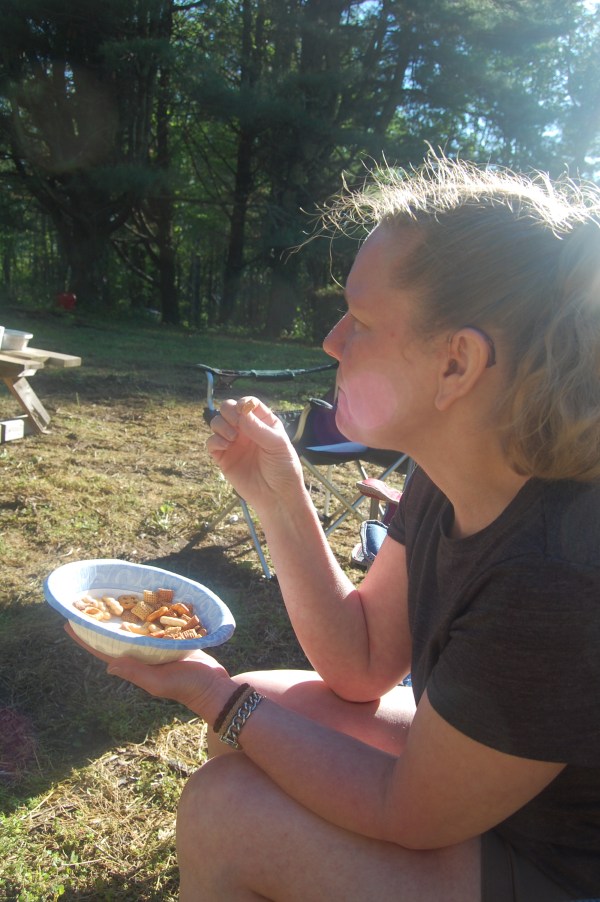
BJ’s and Costco have boxes of individual servings of trail mix, which are convenient to stick in your backpack for the trail. Optionally you can purchase ingredients and make your own with a variety of nuts (cashews, peanuts, almonds), chocolate (either m-n-m’s or chocolate chips, but if it is warm, it will melt), mini-marshmallows, Chex mix, cheerios, raisins, cranberries, or any kind of dried fruit. The nice thing about making your own is that you can choose the nutritional value of each serving. Most store-bought trail mixes have a lot of sugar in them. Keep in mind that just because it is a trail mix doesn’t make it health food. In fact, some have as much sugar as a candy bar.
Unless it is cooller outside, chocolate is probably not a wise snack as it will melt. Energy bars are an excellent option, just look at the nutritional information on the bar. Trader Joe’s or Whole Foods tend to have the healthier options.